Hideo's hospitalization and recovery at Tokyo National Hospital
Strangers (Taichi Yamada Edition)Hideo Harada’s hospitalization and recovery at Tokyo National Hospital make the bodily cost of his encounters with his deceased parents unmistakable. After watching his parents fade from view, he is left profoundly depleted; hospital treatment helps him survive, but does not restore him to his former health or work. His discharge begins a practical recovery supported by friends and family, while the chopsticks he preserves give his grief a continuing, tangible form.
Causes and the final farewell
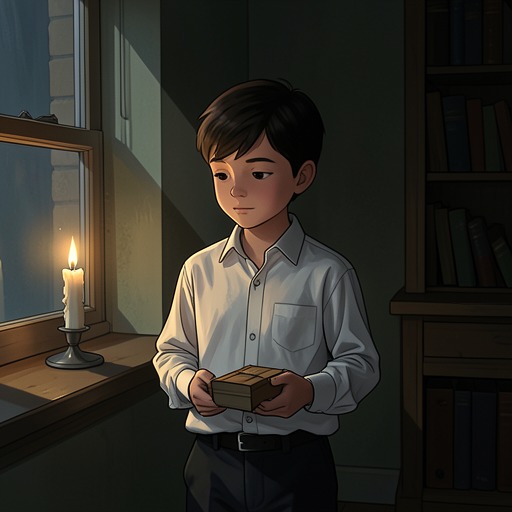
The collapse follows Hideo’s renewed contact with the parents he has met in Asakusa, encounters he has considered possibly imaginary but emotionally sustaining. Earlier, he had reasoned that his visits might be the only thing allowing his parents to exist in that imagined world. At their final farewell, the scene becomes physically impossible to dismiss: he sees through his mother’s shoulders, then watches his father’s body fade. Unable to stop their disappearance, he thanks them quietly and gathers the two pairs of chopsticks they used, fighting through a heavy fatigue to wrap them in his handkerchief.
That farewell supplies the immediate emotional context for his later admission to hospital. The narrative does not present treatment as a simple cure for the encounters’ consequences. Instead, the parents’ fading and Hideo’s exhaustion are followed by a prolonged period of medical care, so the loss registers both as separation and as damage to the living body.
Treatment and incomplete recovery
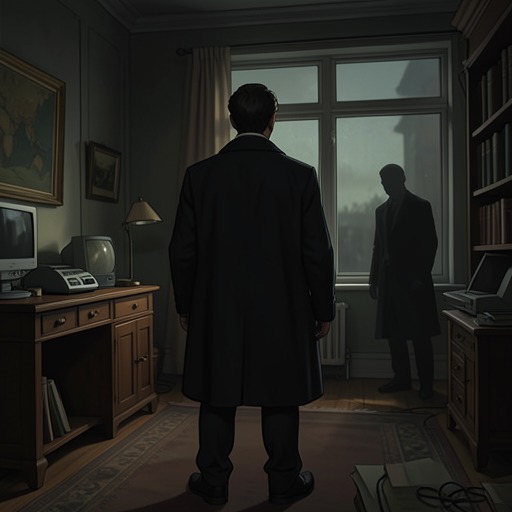
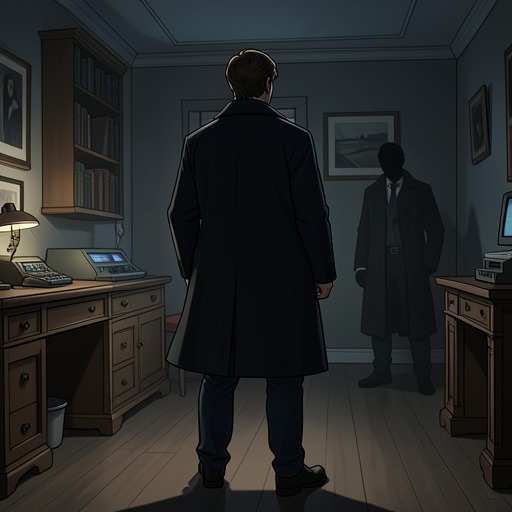
Hideo spends the next twenty-two days at Tokyo National Hospital in Komazawa. By then he is exceedingly frail: half his hair has turned gray, his eyesight is damaged, and he requires daily intravenous feeding. The treatment gradually helps, but recovery remains incomplete. Five days before discharge, his trousers still require his belt to be tightened by two notches; his shirt collar hangs loose, and his complexion remains sallow. Visitors try to reassure him by describing him as having the aura of a mystic, a consoling interpretation that sits uneasily beside the visible evidence of physical decline.
The specific measurements of his changed body make the aftermath concrete. His condition is not conveyed only as a frightening episode that has passed; it is still apparent in his clothes, eyesight, hair, and complexion as he prepares to leave the hospital. Discharge therefore marks improvement, not a return to his former self.
Work and a new home
Hideo is plainly too unwell to write for a television series. Recognizing that he is close to death, his producer does not pressure or punish him and arranges for a younger writer to take over from the second episode. The series director, visiting him in the hospital, says the replacement may even be better suited to the material. Hideo understands the remark as deliberately wounding, though he also recognizes that the production has been inconvenienced by his illness. The episode thus carries a professional consequence alongside the physical one: his recovery requires relinquishing the assignment rather than resuming it.
In mid-September, Hideo leaves the hospital and moves directly into an apartment near Kyodo station on the Odakyu line. Mamiya has found it for him; at about the same rent as his previous accommodation, it gives him slightly more room. Mamiya, Ayako, and Shigeki move his belongings. That evening Hideo calls Ayako to thank her and asks to speak to Shigeki as well, seeking to thank his son directly. The help he receives makes discharge a supported transition rather than a solitary return, and his effort to contact Shigeki gives the practical arrangements a personal consequence.
Keepsakes and continuing remembrance
The chopsticks Hideo gathers as his parents disappear outlast the hospital crisis as a physical reminder of their last meal together. Two years after his previous visit to the family grave in Aichi, where his parents’ ashes are buried, he goes there with incense, a burner, and a small bouquet of chrysanthemums. Mamiya has brought incense too, so they place incense in both holders and pray together. Hideo then thinks of bringing his parents’ chopsticks on his next visit, burning them and praying again.
The planned gesture does not undo the farewell or claim that Hideo has recovered completely. Instead, the saved chopsticks carry the family encounter into a later act of mourning: an object taken from the last shared meal becomes part of a deliberate remembrance at the grave. The hospitalization’s significance therefore extends beyond survival and discharge. It leaves Hideo changed, interrupts his work, and marks a transition from being physically drawn into a reunion with the dead toward sustaining his connection to his parents through memory and ritual.